
MD Anderson & Watson Break Up
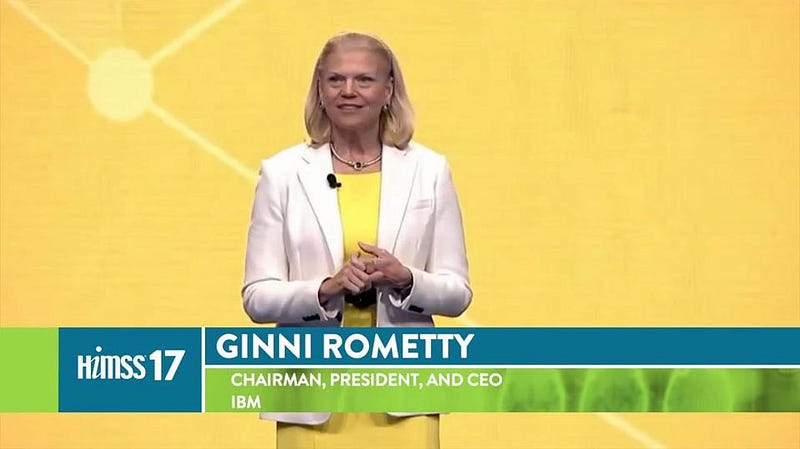
As IBM CEO, Ginny Rometty, took to the stage at HIMMS (the biggest Health IT Trade Show in the United States), news emerged that IBM Watson’s highly publicized venture with MD Anderson had hit the skids. How unfortunate. I don’t wish that on any CEO, let alone a leader I respect tremendously. It’s nearly impossible to turn on a dime, and getting an elephant like IBM to turn during a time of tremendous disruption requires courage, conviction, and the ability to see around corners few can. That is a challenge for any visionary and something to admire.
A few days later, the Wall Street Journal and Forbes came out with articles about the ill-fated partnership. If truth weren’t stranger than fiction, this would be a novel in the making. The plot was thick and the missteps wide. It is a story with many lessons about technological change, and the break-up provides numerous lessons about how to deal with them in the cognitive era.
So, here are Outsell’s lessons learned from MD Anderson and Watson:
- Avoid nepotism: A husband and wife team involved in a highly visible, publically funded, and controversial project is not a good idea. When one of them is accused of sidestepping IT by issuing contracts below purchase approval thresholds to avoid board oversight and the other is president, you can bet heads are going to roll. In fact, they did roll — the president stepped down.
- Speak one language: Technology geeks and end users rarely speak the same language. It’s great to say they share a vision for curing cancer or going to the moon, but when the language and cultural barriers rise during something this high-stakes, it will get ugly. It might have been better to curb the moonshot and focus on incremental wins. It’s cheaper, less visible, creates followship with each little success, and minimizes the risk of the whole thing blowing up publically. Less is more in big cognitive applications, and it was rumored the teams had to practically bunk together to get over the hurdles apparent in their paradigms.
- Don’t sidestep IT: MD Anderson deployed a new EHR system that ended up costing an estimated $400M in lost net income. They built it on software operated by EPIC, and the new EHR system couldn’t speak to Watson. Whoops. Not having a technology architecture that supports your data architecture is going to create friction on that so-called cognitive information highway. Bypassing IT on IT projects is never a good idea, even if we wish it could be otherwise.
- Data quality matters: “Garbage in = garbage out” held in the mainframe era, and it still holds in the cognitive one. The cognitive engine is only as good as the data that feeds it, and if the data going in is bad, what comes out the other side isn’t pretty. The EHR was responsible for one of the bad-data failures. The Forbes article also states, “ The information in the MD-Anderson/Watson product is also now out of date.” This despite IBM’s huge investment in Truven and numerous deals with health information providers. We don’t know what data failed, but we believe it went beyond the EHR. Even if the EHR worked with Watson, cognitive applications have to remain robust with fresh external data. They go hand in hand in today’s near real-time, analytics-driven world. At Outsell, we refer to this as “feeding the beast,” and being able to feed the beast with the right mix of internal and external data is one of the biggest blocks to cognitive systems’ success.
- Skip the consultants. At minimum, don’t let the consultants get rich on your nickel. These big applications are expensive. We hear daily that IBM Watson is expensive, a reason why big brands and big applications are the target. MD Anderson was a showcase application, but MD Anderson spent $62 million, much with IBM, and $21 million with PWC. Paying big bucks for experimental solutions is a no-no. We hear every day that the large consultancies are a mile wide and an inch deep when it comes to big data. I’m not saying PwC did anything wrong, but when big companies rely on big consultants to do the big work, it’s a problem. MD Anderson was ill equipped to deal with PwC’s recommendations, and it’s hard to be a change agent from the outside. Rollouts to partners didn’t occur. Things didn’t happen. MD Anderson spent a lot of money, and the partners got rich while the customer had little to show for it. Anytime a CEO, myself included, thinks a white knight is going to save them, particularly on the IT front, the fairy tale usually ends unhappily.
- Plan for change happening slowly: In these big moonshot deals, real people do real things. When those things involve change, they are usually done slowly or not at all. Technologists rarely understand pesky humans. People are the bane of their existence. It’s no coincidence that driverless cars and people-free checkout stands, bridge tollbooths, and kiosks abound. It’s also no surprise that chatbots are on the rise! The big technology whiz-bang project teams often forget that real habits, belief systems, values, egos, and emotions are in play and deeply entrenched. While there is genuine belief Watson was working, the partnership failed to recognize how hard it would be to get doctors to adopt it. “Guess what, you have a new friend who will travel the floors with you. His name is Watson. He’s a computer, and he’s here to do what you do but better and faster.” Hmmm. I bet that didn’t go over too well.
Don’t say we didn’t warn you about any of this. Outsell’s Simon Alterman wrote, (See Reports, IBM Watson — A Hammer in Search of Nails, May 27, 2015) “These decision-support tools draw on a mix of publicly available and subscription content, with some degree of human adjudication.” The Watson Health team needs to understand that implementing these kinds of decision-support tools depends on the people and processes, not just the wizardry of the technology and the quality of the content.
Too bad they couldn’t even get the content right.
Anthea C. Stratigos is Co-founder & CEO of Outsell, Inc., the leading research and advisory firm focused exclusively on media, information, and technology. Join our exclusive global community supporting over 3,000 executives and influencing billions of dollars in deals. Develop new ideas, see around the corner, grow revenue, and build truly meaningful relationships. Contact us today to start your journey!