
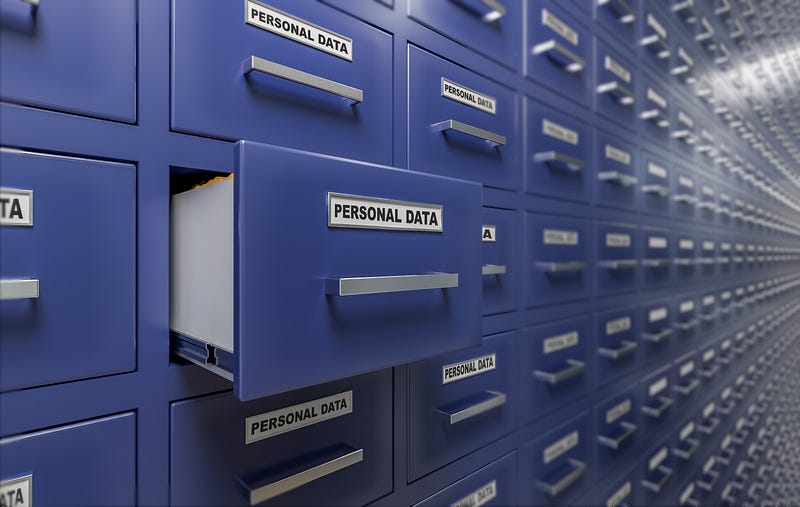
Who Owns My Data?
So now AI is listening in at doctor’s visits — a la ‘ambient notetaking,’ designed to let docs spend more time with patients. Afterall, they had to put their noses into screens because of EHRs, insurance companies, and the scourge of the western system. Forced to use more technology, they are now forced to use even more technology to make things better.
Dun & Bradstreet just sent a notification to me — Subject Line: D&B Professional Contact Data Notification — letting me know about data processing of data about me…. giving me a place to exercise rights, understand them, etc. etc. I love D&B. I have a long history with the firm, and they are one of the few personal data providers that behave with integrity.
Honestly the Zoom’s and some of their ilk have awful practices and the lack of accuracy about our personal data is another scourge. What I received was full of links galore — that led to pages and ever more pages of policy, practice, rights, and contact info.
Nowhere did I really see an easy place to go check my data, correct it, opt in or out and just get the job done. The signature line was D&B Global Compliance & Ethics Team. I should have known. I applaud them for doing this; it’s one of the only efforts I’ve ever seen and I also checked it out with the two analysts that cover D&B at Outsell. They agreed — best practice. Applause, applause. Please though can we keep it easy?
Now our 23andMe data is with big corporate; god knows what DOGE took but I guarantee you it’s in big-tech’s hands. And everything we touch that has data about us is data we no longer own. Just go ask the doctor’s office who is supposed to ask permission. Will we be able to deny it? I’m not so sure. We have to give up our rights to get treated, covered, reimbursed… I can see it coming now.
A few months back on the heels of a car purchase the gentleman taking us through the ‘onboarding process’ went zip, zip, zip, and pop, pop, pop, and with buttons pushed and cellphones up-loaded, everything was being recorded, monitored, and tracked for ‘service.’ I never saw a privacy statement, nor fine print about what’s mine and how it’ll be used or not. It happened so fast it was too late. I drove off the lot with literal data-exhaust in my wake and no sense of the nonsense.
Who owns the data in one’s pacemaker? It makes me wonder. It’s not about data privacy anymore; those days are long gone and privacy went out with the advent of the social security number. It’s been a Faustian bargain ever since. But don’t we get to have some say about how it’s used? My sense is those rights are long gone too.
Who owns the IP called data about us? The data Alexa hears, the directions we ask of Siri, the details our SubZeros, and our cars are giving off, let alone our medical devices. I’m not sure the fine print is even there let alone readable and if it is, no one reads it anyway.
This week a management coach suggested encouraging left-brained highly analytic people who sometimes can’t write well, or freeze at the thought of doing so, or can’t see the impact of their own writing, use AI to help their writing be more empathetic.
Her advice, have them write the piece, then put it through ChatGPT or Claude and ask it to be more: service-oriented, empathic, have more heart → whatever words we want to use to make writing more human.
So, we need the machines to make the humans less machine-like. And ambient notetaking to make our doctors more engaged. You can’t make this stuff up.