
Outsell Event Outlook 2021
Outsell has been at the forefront of researching and benchmarking the new world of events that has been thrust upon us by the pandemic forever changing the field. I’ve blogged about what we see as the future of events long-term, and we recently pulled together our view of 2021. What we see happening this year is a 360 across attendees, event producers, and marketers. Special thanks to our VP & Lead Analyst Randy Giusto, who’s been on top of this since COVID-19 struck. If you’re producing events in 2021, read on for our take on what’s ahead.
US Attendee Data
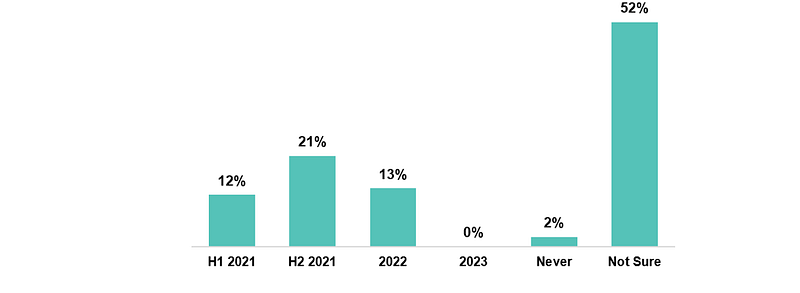
In late October 2020, Outsell conducted a survey among the attendees of 2019 events in the US. Figure 1 shows that only a third of US respondents expect to go to an event at all in 2021, with most of those plans backloaded into the second half. While that dovetails with a “start to return” mid-year, we remain concerned that more than half of respondents are still not sure when they will return and can’t yet commit to any time window. This suggests that, for many past attendees, a post-pandemic world is still out of view for now and the foreseeable future.
Figure 1: When Respondents Plan to Next Attend an In-Person Event for Work
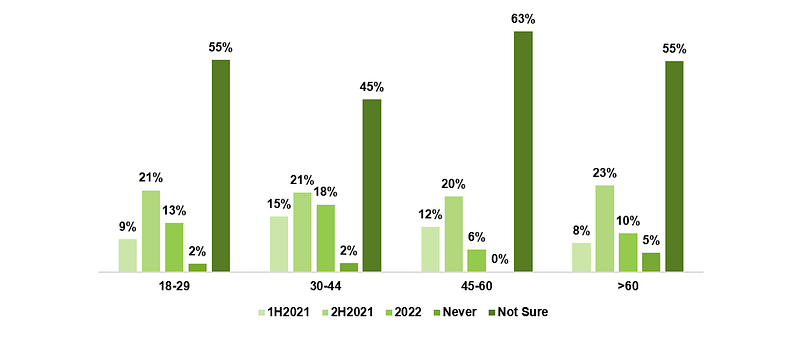
The data shows that 63% of the back half of today’s base audience (45 to 60 years old) remain unsure about when they will return to in-person events. In addition, 55% of Millennial and Gen Z workers still have no view of when they’ll return (Figure 2).
Figure 2: When Respondents Plan to Return to In-Person Events, by Age Cohort
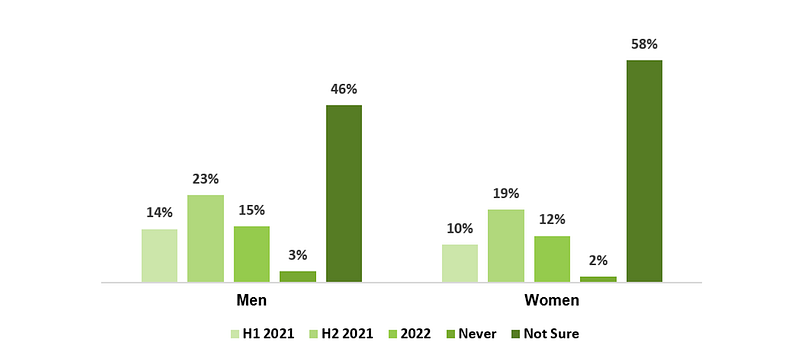
Outsell data (Figure 3) also shows that 58% of women remain unsure about their return to in-person events. Not only will event organizers have a harder time coaxing younger audiences back than older ones, but women will also be harder to draw than men. Younger audiences are also more skeptical about the value of in-person events. The base of tomorrow’s event industry will look different if these audience segments don’t come back in the same numbers as before. It is older males who wish to return, primarily for networking purposes.
Figure 3: When Respondents Plan to Return to In-Person Events, by Gender
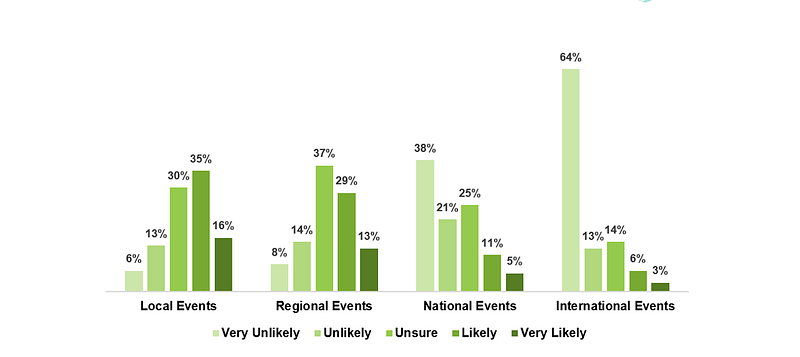
Local and smaller events will lead the charge back (Figure 4). Over 50% of past attendees are likely or very likely to attend local events compared to others held farther away. National events that require people to fly to other cities to attend them and international events that require travel to other countries will take longer to rebound in the US.
Figure 4: Likelihood of Attending Events by Location
US Marketing Budget Directions for 2021
Outsell also surveyed 235 US B2B marketers in December and January to gain a sense of where budgets are headed this year. Sharing those results, we see interesting trends ahead with respect to events, through the following questions and responses. Figure 5 shows when respondents plan to restart hosting in-person events.
Figure 5: Resumption of Hosting In-Person Events
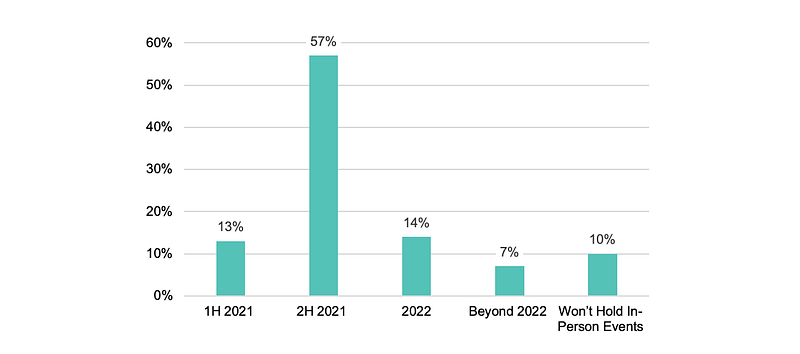
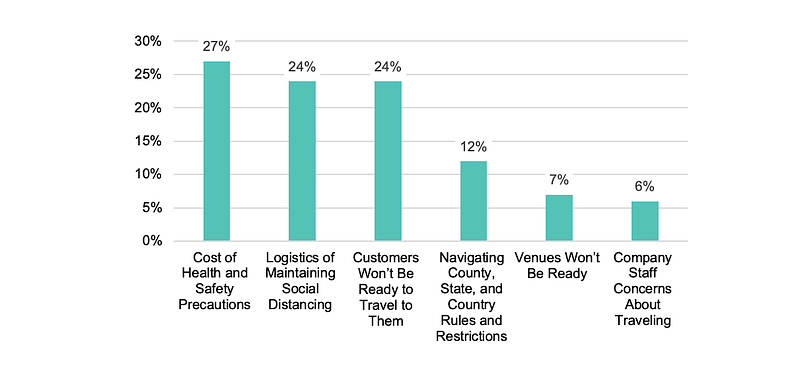
Marketers are planning on rehosting events, but we believe their aspirations are ahead of attendees’ willingness to return. Marketers’ concerns are aligned with this (Figure 6).
Figure 6: Marketer Concerns About Hosting In-Person Events
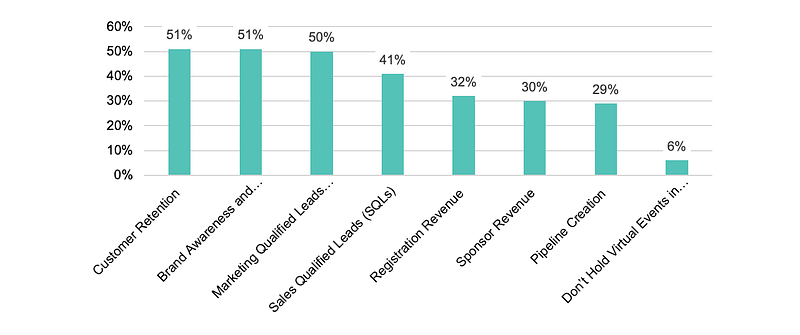
Objectives remain the same, with customer retention and brand awareness being the primary reasons for hosting virtual events in the coming year (Figure 7).
Figure 7: Objectives for 2021 Virtual Events
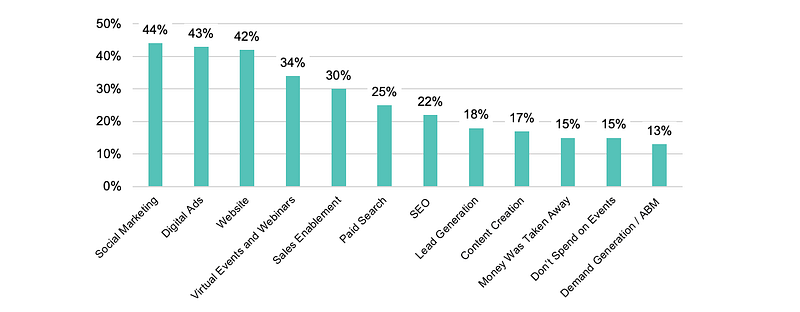
The pullback in spending on in-person events has meant that many of those dollars are now flowing elsewhere (Figure 8). Virtual events are a logical place for them to go, but it’s not the number one area — in fact, it’s number four, with dollars flowing to digital in the form of social marketing, digital ads, and marketers’ own websites.
Figure 8: Where In-Person Spending Money Went
Other Observations
Outsell also recently interviewed CEOs and event leaders in 12 companies and multiple verticals to get a sense of their 2021 event strategies. Companies we’ve spoken to still had hopes for in-person events this summer as of mid-December, but they realized that events could slip from the summer to the fall if the current COVID-19 health crisis does not substantially improve.
Vaccine deployment here in the US is stumbling along state by state. While the federal government is funding the availability of vaccines, it’s leaving it up to the already overburdened states to deploy the infrastructure, resulting in 50 states having 50 different plans. With the current pace of vaccine rollout, it’s now expected that the US won’t have herd immunity for at least three years.
While we expect conditions to improve with a new administration, all indicators are that the US won’t be out of this dark stage of COVID-19 until late summer at the earliest, and that assumes that virus mutations don’t affect vaccine efficacy. This means that events planned for June and July are likely to get pushed to the last quarter or 2022, and we believe 2022 is most likely. What is certain is that trade shows have even less hope in the US in 2021 for now.
For event activity in China, Australia, New Zealand, Korea, or Japan, it’s a different story. When we speak with clients and companies in Europe, we find that all are taking the long road with respect to the US, citing its poor response to the outbreak, fractured supply chain, and anti-vaxer movement — which continues to this day, with recent articles stating that large pockets of healthcare workers are now refusing the vaccine.
We’re always publishing on this topic for clients on the Outsell Community Platform:
· Market Survey: The Return to In-Person Events Is an Extended Road
· Market Survey: The Return to In-Person Events Requires Understanding Generational Needs
Of course, if you’re not a client, give us a call to explore becoming a member today.